

Summary
ADIPEC 2026 - A Very Quick Snippet
5 Hazardous Area Safety Technologies Worth Seeing At ADIPEC
- 1. ATEX Certified Explosion Proof CCTV For Hazardous Areas
- 2. Intrinsically Safe Portable Devices For Inspection And Maintenance
- 3. Explosion Proof Portable Lights for Hazardous Areas
- 4. Forklift Cameras & Proximity Sensors & Visual Warning Systems
- 5. AI Ready Video Analytics For Industrial Safety Monitoring
- 5 Questions To Ask Every Hazardous Area Safety Supplier As A Whole
- Planning Tips For Your Visit
Meet SharpEagle At ADIPEC 2026
Summary
ADIPEC 2026 runs from 2 to 5 November at ADNEC, Abu Dhabi. This guide highlights five hazardous area safety technologies: explosion proof CCTV, intrinsically safe portable devices, explosion proof lights, forklift safety systems and AI video analytics. It also offers supplier questions, planning tips and an invitation to meet SharpEagle.
Every year the global energy industry gathers in Abu Dhabi for ADIPEC. This year ADIPEC 2026 is set to be one of the biggest editions yet. The interesting fact is SharpEagle will be visiting this year as well.
The headlines are usually about energy security and decarbonisation and AI. On the ground though a quieter question shapes how plants and terminals and rigs actually run, which is how do you keep people and assets safe where one spark can cause an explosion?
If you work in oil and gas or else petrochemicals or even maritime or logistics ADIPEC is the best place this year to compare hazardous area safety solutions side by side.
This guide covers the key event details along with five technologies worth seeking out and the questions to ask before you shortlist a supplier.
ADIPEC 2026 - A Very Quick Snippet
ADIPEC 2026 runs from 2 to 5 November 2026 at the Abu Dhabi National Exhibition Centre (ADNEC). It is hosted by ADNOC under the patronage of H.H. Sheikh Mohamed bin Zayed Al Nahyan, President of the UAE.
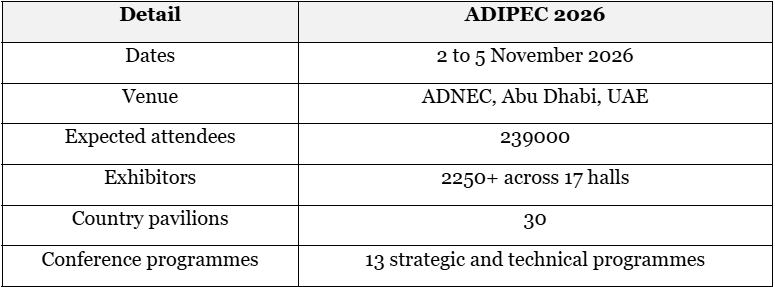 The exhibition also features specialised zones for Decarbonisation as well as Digitalisation in Energy along with Maritime & Logistics and AI innovation. With that much on offer a focused plan makes all the difference.
5 Hazardous Area Safety Technologies Worth Seeing At ADIPEC
1. ATEX Certified Explosion Proof CCTV For Hazardous Areas
In oil and gas refineries and offshore facilities surveillance equipment may need to operate in areas where flammable gases or vapours can be present. Standard CCTV cameras are not automatically suitable for these locations. Equipment selection must account for the hazardous area's classification and the possibility of an ignition source.
Explosion proof CCTV systems are meant to contain one internal ignition or prevent it from igniting the surrounding atmosphere based on their protection concept and certification. These systems allow operators to monitor critical equipment as well as access points and process areas without routinely sending personnel into locations that can be observed remotely.
At ADIPEC buyers should look beyond camera resolution and compare the specifications that determine whether a camera is suitable for their installation.
What to look for
- Hazardous area certification - Verify the ATEX or IECEx documentation, equipment protection marking and suitability for the specific gas group, temperature class and installation zone
- Camera configuration - Compare ex proof fixed cameras for continuous coverage, ex proof PTZ cameras for remote directional control and optical zoom or infrared capabilities for monitoring distant or poorly lit areas
- Housing material - Stainless steel construction can be advantageous in offshore installations and coastal facilities exposed to salt and humidity
- Environmental performance - Check the rated operating temperature, ingress protection and resistance to corrosion particularly for installations exposed to Gulf heat and dust
- System integration - Confirm compatibility with the site's video management system (VMS), network architecture and control room monitoring requirements
For operators planning new surveillance installations or replacing ageing equipment explosion proof CCTV is a practical starting point for evaluating SharpEagle's hazardous area monitoring solutions.
2. Intrinsically Safe Portable Devices For Inspection And Maintenance
Maintenance personnel very most frequently need to photograph equipment as well as inspect confined spaces and document defects and carry out routine checks in potentially explosive atmospheres. The challenge is ensuring that the tools they use are appropriate for the hazardous area in which they are working.
Intrinsically safe portable devices meet this requirement by limiting electrical and thermal energy to levels specified by their protection design and certification. Depending on the product this can include inspection cameras as well as digital cameras and flashlights and other portable electronic equipment.
At ADIPEC the important distinction is between a rugged device and a device approved for use in a specific hazardous location. Shock resistance and waterproofing are useful but neither establishes hazardous area suitability.
What to look for
- Certification for the intended location - Check the device's actual approval, protection level, gas group and temperature classification against site requirements
- Battery safety - Review the approved battery configuration, charging arrangements and restrictions on battery replacement or servicing
- Practical usability - Examine screen visibility in bright sunlight, button operation with protective gloves and camera performance in low light conditions
- Environmental protection - Check resistance to dust, water and mechanical impact against the conditions expected during fieldwork
- Maintenance and serviceability - Show how the equipment is inspected and repaired and returned to service without compromising its certified protection
For facilities where technicians regularly enter classified areas intrinsically safe portable equipment can help standardise field documentation and inspection practices while supporting site's hazardous area procedures.
3. Explosion Proof Portable Lights for Hazardous Areas
Inspection and maintenance work in oil refineries, petrochemical plants, offshore platforms and fuel terminals mostly takes place in areas where flammable gases or vapours may be present.
In these environments workers need reliable portable lighting to inspect equipment, examine pipe connections and carry out maintenance in confined or poorly lit spaces without introducing an ignition risk.
For maintenance teams working around process equipment or inside industrial enclosures or in areas with limited illumination the right portable light can improve visibility and make inspections more practical. However not every industrial flashlight is suitable for hazardous areas. The equipment must have the appropriate certification for the location where it will be used.
What to look for
- Hazardous area certification - Verify the ATEX or IECEx certification, equipment protection marking, gas group and temperature class against the requirements of the intended work area
- Light output and beam performance - Compare brightness, beam distance and illumination coverage to determine whether the light is suitable for close up inspections or tasks requiring visibility over longer distances
- Battery performance - Check operating time, charging requirements and battery replacement procedures to ensure the light meets the demands of extended maintenance shifts
- Durability and environmental protection - Examine resistance to impact, dust, water and temperature extremes, particularly for equipment used on offshore installations and exposed industrial sites
- Portability and ease of use 0 Consider grip, weight, mounting options and ease of operation when workers need to carry the light while inspecting equipment or performing maintenance
- Suitability for the intended application - Confirm that the specific light model and configuration are approved for the hazardous area in which it will be used including any restrictions on charging or servicing
For buyers visiting ADIPEC 2026 explosion proof portable lighting is worth evaluating alongside fixed hazardous area lighting and surveillance equipment. Comparing certification battery performance and practical usability can help maintenance teams identify lighting solutions suited to their operating conditions.
4. Forklift Cameras & Proximity Sensors & Visual Warning Systems
Forklifts and other material handling vehicles operate in environments where people and equipment and moving loads frequently share limited space. This is particularly relevant in warehouses, logistics compounds, industrial plants and port facilities where restricted visibility and reversing movements can increase the risk of collisions.
Forklift safety technologies help drivers identify hazards and improve awareness around the vehicle. Wireless cameras can provide views of blind spots or loads while proximity sensors can warn operators when people or obstacles enter a configured detection area. Blue spot and red zone warning lights project visual signals onto the floor to make approaching vehicles or designated danger zones more noticeable.
These technologies serve different purposes so buyers should assess them as complementary components rather than interchangeable products.
What to look for
- Camera coverage - Check whether the system addresses the forklift's actual blind spots including rear visibility and load related obstructions
- Detection performance - Ask about the sensors' detection range, response time, environmental limitations and ability to distinguish relevant obstacles
- Warning visibility - Evaluate blue spot or red zone lights under the site's lighting conditions and in areas where floors may be dusty or reflective
- Installation compatibility - Confirm that cameras, sensors and warning devices can be fitted without obstructing the operator or interfering with the vehicle's operation
- Hazardous area requirements - If forklifts operate in classified areas verify that every component requiring hazardous area approval has the appropriate certification for that location
For industrial facilities managing frequent vehicle movements SharpEagle's forklift safety solutions are worth examining as part of a broader approach to improving driver visibility and pedestrian awareness.
5. AI Ready Video Analytics For Industrial Safety Monitoring
Video surveillance can provide continuous visibility across an industrial site but conventional monitoring still depends heavily on people noticing an event in the camera feed. At facilities with extensive camera networks reviewing every feed continuously can be difficult.
AI enabled video analytics can help address this challenge by analysing video streams for predefined events or conditions. Depending on the software and its configuration applications may include detecting unauthorised entry into restricted areas or identifying missing personal protective equipment PPE or recognising unsafe movements or flagging visual indicators of smoke.
These alerts can help operators prioritise review and response. However analytics should be evaluated against real operating conditions rather than demonstrations using carefully selected footage.
What to look for
- Detection capabilities - Establish exactly which events the software can detect which camera views it supports and what environmental conditions affect performance
- False alarms and missed detections - Ask how the supplier measures detection accuracy and how the system performs with changing light, dust, occlusion and crowded scenes
- Integration with existing CCTV - Confirm whether the analytics can work with the site's existing camera network and VMS or whether specific hardware is required
- Hazardous area camera compatibility - Verify that the analytics platform can process video from the explosion proof cameras installed on site. AI software does not replace the camera's hazardous area certification
- Alert management - Check how alerts reach control room operators or how events are recorded and whether the system supports an appropriate review and escalation process
One difference needs a very particular attention which is visual analytics cannot reliably identify every hazardous gas leak or confirm that a flammable atmosphere is present. Gas detection generally requires appropriately selected gas detection equipment. Similarly smoke detection through video depends on visibility and the system's validated capabilities.
For facilities managing forklift operations in warehouses or industrial plants and logistics areas our AI powered forklift camera solutions offer a practical way to enhance operator awareness and support safer material handling.
At ADIPEC 2026 visitors can explore how AI enabled camera technology can help address visibility challenges around industrial vehicles and evaluate its suitability for their operational requirements.
5 Questions To Ask Every Hazardous Area Safety Supplier As A Whole
Use these 5 questions to separate real capability from marketing
1. Which certifications does the product hold
Ask for the ATEX or IECEx certificate number and check the zone, gas group and temperature class
2. Has it been deployed in the GCC
References from operators in the UAE, Saudi Arabia, Kuwait or Oman show the kit has survived local heat, humidity and dust
3. Who designs and installs the system
A camera is only one part. Cable glands, junction boxes and mounting must also suit the hazardous area
4. What happens after installation
Ask about spare parts, response times and onsite technical support
5. Can it integrate with what we already have
Confirm compatibility with your existing VMS, control room and network
Planning Tips For Your Visit
- Book meetings before 2 November. The busiest exhibitors fill their calendars early
- Bring site details. Zone classifications, photos and layouts make conversations far more useful
- Plan your halls. With 17 halls group your visits by zone to save time
- Leave room for the conferences. The technical sessions are useful for safety and digitalisation updates
Meet SharpEagle At ADIPEC 2026
The SharpEagle team will be at ADIPEC 2026 from 2 to 5 November. We offer ATEX certified explosion proof CCTV, explosion proof portable lights including emergency and exit lights, intrinsically safe portable devices and AI powered forklift camera solutions. Our customers include operators across the UAE, Saudi Arabia, Kuwait, Oman and the UK.
Whether you're planning a new hazardous area surveillance project or upgrading an existing site we'd be glad to talk through your requirements in person.
Book a meeting with SharpEagle at ADIPEC 2026 →
Can't make it to Abu Dhabi? Contact our team and we'll arrange a call.
