

Summary
Importance of surveillance in hazardous industrial environments
Risks of using standard CCTV cameras in explosive atmospheres
What Is an Explosion Proof Fixed Type Camera?
- Definition and core purpose
- Difference between fixed type and PTZ explosion-proof cameras
- Why fixed-position monitoring is critical in hazardous zones
- Typical hazardous area use cases
Why Explosion Proof Cameras Are Essential for Industrial Safety
How Does an Explosion Proof Fixed Type Camera Work?
- Explosion-proof housing and flameproof design
- Pressure containment and heat dissipation
- Role of certified cable glands and enclosures
- Fixed field-of-view for consistent monitoring
Key Features of Explosion Proof Fixed Type Cameras
- ATEX / IECEx certified construction
- Stainless steel or aluminium housing
- High-definition imaging
- Infrared (IR) and low-light performance
- Weatherproof and corrosion-resistant design
- IP-rated protection for harsh environments
Benefits of Using Explosion Proof Fixed Type Cameras
- Enhanced personnel and asset safety
- Compliance with international safety standards
- Reliable surveillance in extreme conditions
- Reduced downtime and operational risk
- Long service life with minimal maintenance
Where Are Explosion Proof Fixed Type Cameras Used?
- Oil & gas refineries and offshore platforms
- Chemical and petrochemical plants
- Power generation facilities
- Hazardous warehouses and storage areas
- Manufacturing plants with flammable materials
How to Choose the Right Explosion Proof Fixed Type Camera
- Hazardous area classification (Zone 1 / Zone 2)
- Required resolution and viewing angle
- Environmental factors (temperature, corrosion, dust)
- Integration with existing CCTV/VMS systems
Installation Best Practices
- Importance of certified installation procedures
- Correct mounting positions for fixed cameras
- Safe wiring, conduit, and power supply considerations
- Compliance checks after installation
Maintenance & Inspection Guidelines
- Routine visual inspections
- Checking seals and enclosure integrity
- Cleaning procedures without affecting certification
- Documentation for audits and safety reviews
ATEX, IECEx & Regional Safety Regulations
- Understanding ATEX directives
- IECEx global compliance
- UK, UAE, and KSA hazardous area standards
- Common compliance mistakes to avoid
Real-World Applications & Industrial Examples
- Oil refinery surveillance case
- Chemical plant safety monitoring
- How explosion-proof cameras reduced incident risks
Conclusion
Summary
An Explosion Proof Fixed Type Camera provides reliable, continuous monitoring in hazardous environments where flammable gases, vapours, or dust may be present. This guide explains how explosion-proof housing works, why fixed monitoring is critical in Zone 1 and Zone 2 areas, and how ATEX and IECEx compliance supports safety and audit readiness. You’ll learn key features like HD imaging, IR performance, and IP-rated protection, plus selection tips, installation best practices, maintenance guidance, and real industrial applications.
Importance of surveillance in hazardous industrial environments
Hazardous industrial environments don’t run on assumptions. They run on controls. And surveillance is one of the strongest controls you can have because it helps you monitor:
- restricted zones
- critical equipment areas
- high-risk operational points
- perimeter security and access control
- abnormal behaviour before it becomes an incident
In high-risk sites, a camera isn’t just “watching.” It’s supporting safety decisions 24/7. That’s why a hazardous area CCTV camera plays a direct role in operational continuity.
Risks of using standard CCTV cameras in explosive atmospheres
Standard CCTV cameras are designed for regular environments—offices, malls, normal warehouses. But hazardous zones can contain:
- flammable gases
- explosive vapours
- combustible dust
- chemical fumes
- volatile fuel particles
A normal camera can become a problem if it produces sparks, heat, or internal faults. Even if the risk is low, in explosive zones, “low risk” is still too high. This is why using a certified explosion proof CCTV camera is not just best practice—it’s often essential.
This guide will help you understand:
- what makes a camera explosion-proof
- how fixed cameras differ from PTZ systems
- why ATEX and IECEx compliance matters
- where fixed explosion-proof cameras are used
- how to select, install, and maintain the right solution
- real industrial examples that show the impact
What Is an Explosion Proof Fixed Type Camera?
Definition and core purpose
An Explosion Proof Fixed Type Camera is a stationary surveillance camera engineered to operate safely in hazardous environments where explosive gases, vapours, or dust may be present. It provides reliable monitoring while ensuring the camera itself does not create ignition risk.
Difference between fixed type and PTZ explosion-proof cameras
The biggest difference is movement. A fixed explosion proof camera captures a constant view of a specific zone. A PTZ system pans, tilts, and zooms to cover a wider area. So why choose fixed? Because fixed cameras offer:
- fewer moving parts
- stable, continuous monitoring
- lower maintenance requirements
- consistent coverage of high-risk points
Why fixed-position monitoring is critical in hazardous zones
Fixed monitoring is perfect when you need to watch areas like:
- valve manifolds
- pump rooms
- tank farms
- entry/exit points
- loading and unloading zones
- storage corridors
These are places where you don’t want the camera “looking somewhere else” when something happens. A fixed camera stays focused. Always.
Typical hazardous area use cases
An industrial explosion proof camera is commonly used in:
- oil refineries
- chemical plants
- petrochemical units
- offshore platforms
- hazardous warehouses
- power generation facilities
- manufacturing areas handling flammable materials
If the site is classified as hazardous, the camera must match that reality.
Why Explosion Proof Cameras Are Essential for Industrial Safety
Safety in Explosive Environments
Fire, gas, and dust explosion risks
Hazardous environments are dangerous because ignition can happen quickly.
Common threats include:
- gas leaks that spread unnoticed
- vapours building up in confined areas
- dust particles igniting in the air
- equipment overheating
- electrical faults
In such conditions, the role of an explosion proof camera becomes critical—it supports monitoring without adding ignition risk.
Preventing sparks and ignition sources
Explosion-proof cameras are designed to prevent ignition by controlling:
- internal sparks
- heat levels
- pressure and flame escape routes
This makes them suitable for explosive atmospheres where standard devices are unsafe.
Regulatory Compliance
ATEX and IECEx requirements
Most hazardous sites operate under strict rules that require certified equipment. That’s where an ATEX certified CCTV camera and an IECEx explosion proof camera become essential. These certifications help confirm that the camera is tested and approved for hazardous environments under defined conditions.
Legal and insurance implications
Non-compliance doesn’t just risk safety—it can lead to:
- audit failures
- insurance complications
- legal penalties
- operational shutdowns
- loss of client trust
A certified explosion proof surveillance camera reduces these risks.
Continuous Monitoring & Risk Reduction
24/7 surveillance in critical zones
Hazardous zones don’t become safe after working hours. Leaks, intrusion, and abnormal activity can happen anytime. That’s why fixed cameras are valuable—they provide consistent visibility.
Incident prevention and operational continuity
Surveillance supports:
- early detection
- faster response
- reduced downtime
- stronger investigation capability
When an incident is prevented, the value is not just safety—it’s business continuity.
How Does an Explosion Proof Fixed Type Camera Work?
Explosion-proof housing and flameproof design
The key element is the enclosure. An explosion-proof fixed camera uses a certified housing designed to:
- contain internal ignition
- prevent flame from escaping
- protect the surrounding environment from ignition sources
This is not just “a metal casing.” It’s engineered protection.
Pressure containment and heat dissipation
Explosion-proof housings are designed to handle:
- internal pressure safely
- heat distribution without overheating
- long operating hours without failure
Heat management matters because heat is a major ignition risk in hazardous zones.
Role of certified cable glands and enclosures
Even the accessories matter. Cable entry points must use certified components, including:
- approved cable glands
- sealed conduits
- correct fittings for hazardous zones
If the camera is certified but the installation accessories aren’t, the system may no longer meet compliance expectations.
Fixed field-of-view for consistent monitoring
A fixed camera provides a stable, predictable view. This is ideal for:
- safety monitoring
- security control
- equipment observation
- incident recording
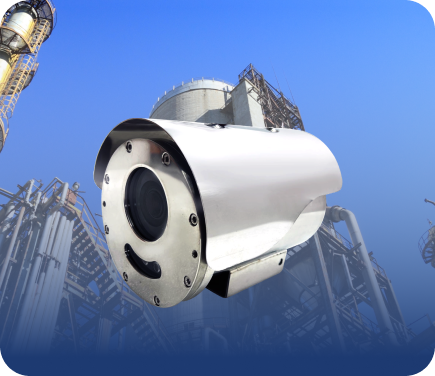
Key Features of Explosion Proof Fixed Type Cameras
ATEX / IECEx certified construction
Certification is the foundation. A camera should be designed and tested to meet hazardous area requirements and match your site classification.
Stainless steel or aluminium housing
Housing materials matter for durability.
- Stainless steel is ideal for corrosion-heavy environments
- Aluminium offers strength with lighter weight
Both are common in explosion proof CCTV camera designs depending on the application.
High-definition imaging
HD imaging improves:
- identification clarity
- incident review accuracy
- monitoring of equipment details
- security response decisions
In hazardous environments, blurry footage isn’t useful footage.
Infrared (IR) and low-light performance
Many hazardous areas have poor lighting at night or in enclosed spaces. IR capability helps ensure monitoring continues even when visibility drops.
Weatherproof and corrosion-resistant design
Outdoor hazardous areas need protection from:
- rain
- dust
- heat
- chemical exposure
- salty marine air
That’s why weatherproof design is essential.
IP-rated protection for harsh environments
A reliable explosion proof IP camera should provide strong ingress protection to keep performance stable in extreme conditions.
Benefits of Using Explosion Proof Fixed Type Cameras
Enhanced personnel and asset safety
A certified camera supports safer environments by improving visibility in critical zones and reducing risk exposure.
Compliance with international safety standards
Using certified equipment supports compliance readiness and helps avoid regulatory issues.
Reliable surveillance in extreme conditions
Explosion-proof fixed cameras are built for environments that destroy normal cameras—heat, dust, corrosion, and vibration.
Reduced downtime and operational risk
Better monitoring leads to faster response and fewer disruptions.
Long service life with minimal maintenance
A fixed camera has fewer moving parts, which often means:
- fewer failures
- lower maintenance needs
- longer operational life
Where Are Explosion Proof Fixed Type Cameras Used?
Oil & gas refineries and offshore platforms
An oil and gas explosion proof camera is commonly used for monitoring:
- tank farms
- pump stations
- refinery corridors
- offshore processing zones
- restricted areas
In oil & gas, safety monitoring is non-negotiable.
Chemical and petrochemical plants
A chemical plant explosion proof camera supports surveillance in:
- reaction units
- storage zones
- chemical corridors
- restricted access areas
Power generation facilities
Power plants often have fuel-handling and high-risk areas where certified surveillance is required.
Hazardous warehouses and storage areas
Hazardous warehouses store materials that may ignite easily, making certified monitoring important for safety and security.
Manufacturing plants with flammable materials
Many manufacturing facilities handle solvents, vapours, or dust that can create explosive atmospheres—requiring certified camera solutions.
How to Choose the Right Explosion Proof Fixed Type Camera
Hazardous area classification (Zone 1 / Zone 2)
Start with classification. A Zone 1 explosion proof camera is typically required where explosive atmospheres are likely during normal operations. A Zone 2 explosion proof camera is used where explosive atmospheres occur less frequently and for short durations. Choosing the wrong zone rating can create compliance and safety problems, so this step must be correct.
Required resolution and viewing angle
Ask yourself:
- Do you need a wide view or focused detail?
- Are you monitoring a corridor or a fixed equipment point?
- Is identification clarity required?
A fixed camera works best when the viewing angle matches the risk zone perfectly.
Environmental factors (temperature, corrosion, dust)
Consider real conditions:
- extreme heat
- chemical exposure
- salt air offshore
- dust-heavy operations
The right housing material and IP rating will make a huge difference in lifespan.
Integration with existing CCTV/VMS systems
A good hazardous area CCTV camera should integrate smoothly with your existing CCTV setup or VMS platform. This makes monitoring easier and avoids unnecessary system changes.
Installation Best Practices
Importance of certified installation procedures
Installation is not just mounting a camera. Hazardous areas require:
- certified methods
- approved accessories
- safe routing
- correct sealing
- proper documentation
Even the best camera can fail compliance if installed incorrectly.
Correct mounting positions for fixed cameras
Fixed cameras must be placed with purpose:
- cover entry points
- monitor critical equipment
- avoid obstruction from structures
- maintain stable vibration-free mounting
A fixed camera is only effective if it sees the right zone clearly.
Safe wiring, conduit, and power supply considerations
Use certified wiring and routing methods suitable for hazardous environments. Ensure safe connections and proper protection.
Compliance checks after installation
After installation, confirm:
- camera coverage is correct
- system is stable
- video feed quality is consistent
- documentation is complete for audits
Maintenance & Inspection Guidelines
Routine visual inspections
Check regularly for:
- physical damage
- corrosion
- loose mounts
- lens obstruction
Checking seals and enclosure integrity
Seals are critical in explosion-proof systems. Any compromise can impact safety.
Cleaning procedures without affecting certification
Clean carefully using approved methods so you don’t damage the housing, lens, or protective coatings.
Documentation for audits and safety reviews
Keep records of:
- inspection schedules
- maintenance actions
- any replacements
- certification references
In hazardous environments, documentation matters almost as much as equipment.
ATEX, IECEx & Regional Safety Regulations
Understanding ATEX directives
ATEX is widely used for hazardous area equipment compliance in many industrial operations. An ATEX certified CCTV camera supports compliance where ATEX requirements apply.
IECEx global compliance
IECEx is internationally recognised and commonly used across industrial projects, especially in global operations.
UK, UAE, and KSA hazardous area standards
Across the UK, UAE, and KSA, hazardous area surveillance is often expected in industries like:
- oil & gas
- petrochemicals
- industrial processing
- fuel storage and distribution
Certified equipment supports safer operations and stronger compliance readiness.
Common compliance mistakes to avoid
Avoid mistakes like:
- using non-certified cameras in hazardous zones
- using uncertified cable glands
- installing the wrong zone-rated equipment
- skipping documentation
- ignoring inspection schedules
Real-World Applications & Industrial Examples
Oil refinery surveillance case
A refinery required continuous monitoring near pump and valve areas where gas exposure risk existed. A fixed explosion-proof camera setup helped deliver:
- stable monitoring day and night
- improved incident detection
- reduced need for physical inspections
- better safety oversight in restricted zones
Chemical plant safety monitoring
A chemical facility needed better after-hours surveillance in high-risk storage areas. By using certified explosion-proof cameras, they improved:
- perimeter security
- restricted zone monitoring
- investigation clarity during abnormal events
How explosion-proof cameras reduced incident risks
Across multiple industrial environments, fixed explosion-proof cameras reduce risk by:
- improving visibility in critical areas
- supporting early detection
- enabling faster response
- strengthening compliance readiness
Conclusion
Hazardous environments demand a different level of surveillance. A standard camera might record video, but it may also introduce ignition risk in explosive atmospheres. That’s why a certified Explosion Proof Fixed Type Camera is essential for safe, compliant monitoring in Zone 1 and Zone 2 areas. With durable construction, HD imaging, low-light performance, and IP-rated protection, these cameras deliver reliable monitoring where safety and compliance matter most. If you’re planning a hazardous area surveillance upgrade, the best next step is choosing certified solutions that match your environment and risk level.
Explore SharpEagle Explosion Proof Fixed Type Cameras built for industrial hazardous zones.
Request a hazardous area safety assessment to identify the right coverage plan.
Contact SharpEagle for expert guidance and certified explosion-proof surveillance solutions.