

Summary
Why Ordinary Flashlights Can Kill in Explosive Atmospheres
What Is an Explosion Proof Flashlight?
Hazardous Area Classifications Explained: Zones, Divisions and Gas Groups
ATEX, IECEx and UL Certifications: What They Mean and How to Read the Markings
Industries That Require Explosion Proof Flashlights
9 Key Features to Evaluate Before Buying an Explosion Proof Flashlight
SharpEagle Explosion Proof Flashlight Models: Which One Is Right for You?
Explosion Proof vs Intrinsically Safe Flashlight: Which Protection Concept Do You Need?
Step-by-Step: How to Select the Right Explosion Proof Flashlight
Inspection, Maintenance and Safe Use: Keeping Your Intrinsically Safe Torch Compliant
Conclusion: Choosing the Right Explosion Proof Flashlight Protects Lives and Licenses
Summary
Working in hazardous areas requires lighting that prevents ignition, not just illumination. This guide explains how explosion proof flashlights and intrinsically safe torches work, covering Ex d and Ex i protection, ATEX, IECEx, UL certifications, zone classifications, gas groups, IP ratings, and key buying features. It also compares SharpEagle’s 2101, 2102, and 2103 models for different site needs, from compact inspections to extended shifts, while outlining safe use, maintenance, and compliance checks for high-risk industrial environments worldwide.
Why Ordinary Flashlights Can Kill in Explosive Atmospheres
Non-certified equipment contributes to a significant share of ignition incidents across oil and gas facilities globally, and portable lighting is one of the most overlooked sources of risk. Workers carry torches into hazardous areas dozens of times per shift without a second thought, yet a standard flashlight contains everything needed to complete the ignition triangle.
Picture a maintenance technician on a refinery platform checking a flanged joint at 2 AM. His torch flickers, the bulb glass cracks under thermal stress, and the exposed filament meets hydrocarbon vapor. That near-miss plays out across industries more often than incident reports reflect.
The ignition triangle requires heat, fuel, and oxygen. A standard flashlight contributes heat through its bulb and potential sparks through its switch. In a Zone 1 area, the triangle is already two-thirds complete before the worker arrives. A bulb shattering or a switch arcing finishes it.
The legal dimension is equally serious. Using non-certified lighting in a classified hazardous area is a regulatory violation under ATEX in Europe, NEC in North America, and equivalent frameworks across the Gulf region. This guide covers zone classification, certifications, and selection criteria to help you make the right call.
What Is an Explosion Proof Flashlight?
An explosion proof flashlight is a torch designed to contain any internal ignition within a sealed, flameproof enclosure so it cannot ignite surrounding flammable gases or dust.
Two core protection concepts apply to certified portable lighting. The first is flameproof enclosure, marked Ex d. The housing withstands an internal explosion and cools escaping gases below their ignition temperature before they reach the surrounding atmosphere. The second is intrinsic safety, marked Ex i. An intrinsically safe flashlight limits electrical and thermal energy within the circuit to levels that cannot cause ignition even under fault conditions.
Physically, a sealed aluminum housing prevents gas ingress, O-ring gaskets maintain enclosure integrity, and a toughened lens resists thermal and mechanical stress. An explosion proof LED flashlight benefits additionally from lower heat output, no fragile filament, and reduced current draw compared to older incandescent designs.
These terms are not interchangeable. Explosion proof refers to enclosure containment. Explosion resistant means the device survives blast forces but does not prevent ignition. Intrinsically safe means circuit energy is limited so ignition cannot occur. Getting this distinction right is essential when writing a procurement specification.
Hazardous Area Classifications Explained: Zones, Divisions and Gas Groups
Zone 0 means a flammable atmosphere is present continuously, typically inside storage tanks. Zone 1 means it is likely during normal operation, such as around pump seals on an offshore platform. Zone 2 means it is not expected normally but could occur under abnormal conditions.
In North America, Division 1 maps to Zones 0 and 1. Division 2 maps to Zone 2.
Dust zones are frequently overlooked. Zone 21 applies where combustible dust is likely during normal operations, common in grain mills and pharmaceutical plants. Zone 22 covers occasional dust presence. An intrinsically safe torch light certified for dust zones is required in these environments, not optional.
Equipment groups matter too. Group I covers mining methane hazards. Group IIA, IIB, and IIC cover surface industry gases in increasing sensitivity, with IIC covering hydrogen. Group III covers combustible dusts.
Temperature classes T1 to T6 define maximum surface temperature. T4 limits this to 135 degrees Celsius. You match the torch T-class to the autoignition temperature of the most sensitive substance on site.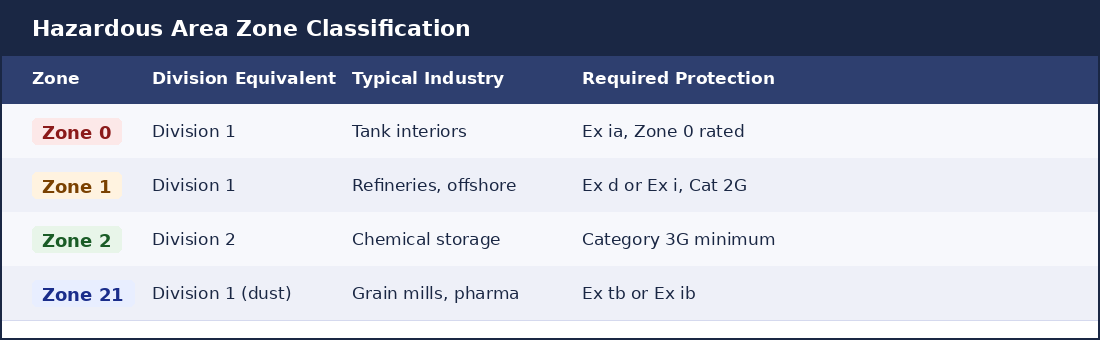
ATEX, IECEx and UL Certifications: What They Mean and How to Read the Markings
ATEX, governed by EU Directive 2014/34/EU, applies to equipment sold in Europe. Category 1G suits Zone 0, Category 2G covers Zone 1, and Category 3G covers Zone 2. A notified body, an accredited third-party laboratory, must test and certify the product. An ATEX flashlight without a notified body certificate number is not compliant.
IECEx is the international scheme with broad mutual recognition with ATEX. Certificates are verifiable on the public IECEx OD database, which simplifies cross-region procurement considerably.
UL and CSA certifications govern North American requirements under NEC 500 and NEC 505, covering Class I Division 1 and Division 2 environments.
IP ratings define ingress protection. The first digit covers dust, where 6 means total exclusion. The second covers water, where 5 means jet resistance, 7 means temporary submersion, and 8 means continuous submersion. IP65 suits most indoor industrial environments. IP68 is required for offshore washdown or submersible conditions.
How to decode an ATEX marking using the example II 2G Ex db IIC T4 Gb:
- II: Equipment Group II, surface industry
- 2G: Category 2, Zone 1 gas atmosphere
- Ex: certified explosion protection
- db: flameproof enclosure with increased safety
- IIC: most sensitive gas group, including hydrogen
- T4: maximum surface temperature 135 degrees Celsius
- Gb: protection level for Zone 1 gas hazards
Industries That Require Explosion Proof Flashlights
Oil and gas platforms, refineries, and wellhead areas operate under Zone 1 conditions with methane and H2S present during normal operations. Workers conducting rounds or inspecting pipework need an explosion proof LED flashlight rated for Group IIB or IIC environments.
Underground coal mining involves Group I methane in confined spaces with inconsistent ventilation. A flameproof torch certified for mining is mandatory for any below-surface equipment inspection.
Chemical and petrochemical plants present Zone 1 conditions near distillation columns, solvent storage, and loading bays. An ex-protected LED flashlight covering IIB or IIC gas groups is standard issue where substance variety means broad-spectrum coverage matters.
Grain and flour mills carry combustible dust risk in Zone 21 and Zone 22 conditions during filling and cleaning operations. This environment is among the most commonly underestimated in industrial safety planning.
Pharmaceutical manufacturing facilities handling alcohol-based solvents require certified lighting in classified zones, often with additional cleanroom material compatibility requirements.
Emergency response and HazMat teams enter unknown atmospheres where the substance may not be confirmed before arrival. Fire brigades attending industrial incidents need an ATEX flashlight covering multiple gas groups and offering robust IP ratings for unpredictable field conditions.
9 Key Features to Evaluate Before Buying an Explosion Proof Flashlight
- Certification scope: Confirm the certificate covers your specific zone, gas group, and T-class. Check the actual certificate document, not just the label marking.
- Lumen output: Close-range confined space inspection needs 200 to 500 lumens. Wide-area outdoor work may need 800 or more. Verify realistic field performance figures rather than peak claims.
- Battery type and runtime: Rechargeable Li-ion in the 2200 to 4400 mAh range balances runtime and weight for shift work. All charging must occur in non-hazardous areas.
- IP rating: IP65 handles most indoor industrial conditions. IP68 is necessary for washdown environments or where submersion is a realistic possibility.
- Housing material: High-alloy aluminum with an anodized or sandblasted finish delivers corrosion resistance and impact absorption. Avoid polymer housings in high-temperature or chemical environments.
- Switch type: Sealed toggle switches and guarded push-buttons reduce accidental arcing. Magnetic reed switches eliminate metallic contact entirely, offering the lowest ignition risk.
- Beam modes: A fixed beam covers routine inspection. Strobe and SOS modes add emergency signaling, particularly valuable during confined space entry or lone worker situations.
- Ergonomics: Weight, grip texture, and body geometry affect usability across a full shift. Right-angle bodies allow helmet mounting for hands-free operation.
- Temperature class: Match T-class to the autoignition temperature of the most sensitive substance on your site. T4 covers most petrochemical environments; T5 provides additional margin for sensitive solvents.
SharpEagle Explosion Proof Flashlight Models: Which One Is Right for You?
SharpEagle offers three ATEX-certified explosion proof flashlight models, each built for a different operational profile.
RC-SE-EXPFL-2101: Compact Single-Cell Model
Best for light-duty inspections, confined space entry, and Zone 2 environments where a compact pocket torch is needed. Ideal for technicians carrying multiple tools on a belt.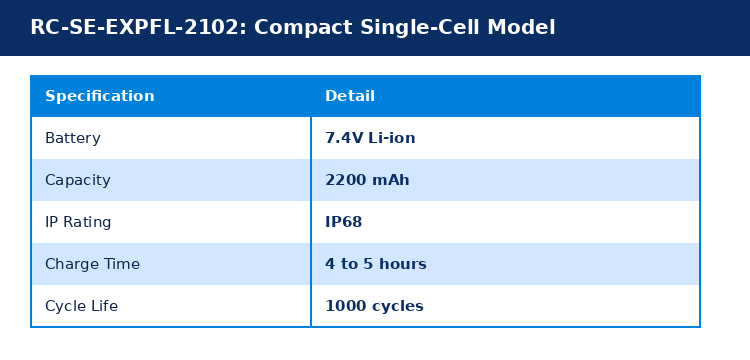 RC-SE-EXPFL-2102: Mid-Range Dual-Cell Model
Best for standard Zone 1 and Zone 2 shift work covering gas and dust classifications. The IP68 rating suits offshore platforms and petrochemical maintenance teams in wet or washdown conditions.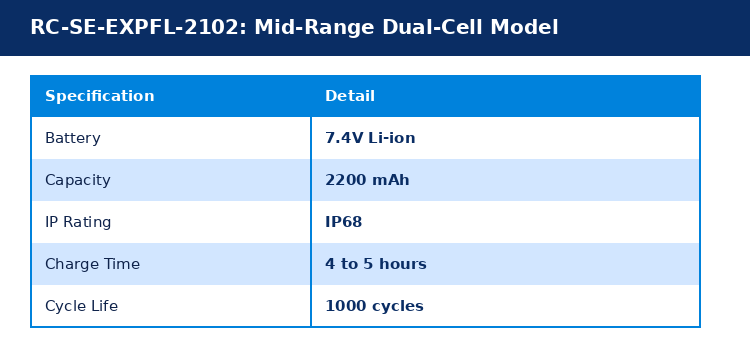
RC-SE-EXPFL-2103: Heavy-Duty Extended Model
Best for extended 12-hour shifts where recharging mid-operation is not possible. Oil rig crews, underground mining teams, and emergency response units rely on the 2103's doubled capacity.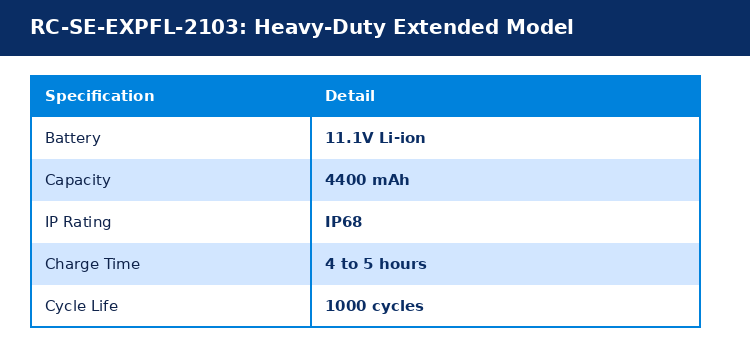 All three share ATEX certification, sandblasted anodized aluminum housing, high-performance LED output, strobe and SOS modes, 1000-cycle battery life, and low self-discharge for reliable readiness between shifts.
Download the full technical datasheet or request a quote via the SharpEagle inquiry page.
Explosion Proof vs Intrinsically Safe Flashlight: Which Protection Concept Do You Need?
An explosion proof torch using Ex d flameproof enclosure design physically contains any internal ignition event. The housing is robust and typically heavier, making it well suited for Zone 1 heavy industrial environments where rough handling is routine. A flameproof torch is the conventional choice for oil and gas maintenance crews.
An intrinsically safe flashlight limits circuit energy below ignition threshold under any fault condition, making ignition physically impossible rather than contained. This produces a lighter device better suited for continuous personal carry in Zone 0 and Zone 1 areas. An ex proof LED flashlight using intrinsic safety is preferred where workers move frequently through multiple zones during a shift.
Intrinsically safe designs carry higher engineering costs but are lighter in use. Flameproof enclosures are simpler mechanically but heavier. After repair, intrinsically safe circuits must return to the manufacturer or authorized service center. Flameproof enclosures can sometimes be re-inspected and re-gasketed in the field by trained personnel following defined procedures.
Some sites require both approaches. An ex-protected LED flashlight with intrinsic safety may cover Zone 0 tank entries while a flameproof torch handles Zone 1 process areas. SharpEagle can advise on mixed-zone procurement based on your area classification drawings.
Step-by-Step: How to Select the Right Explosion Proof Flashlight
Step 1: Identify your substances. Determine whether the hazard is gas, vapor, or combustible dust. Note the gas group from your Safety Data Sheets.
Step 2: Confirm your zone classification. Pull your site's area classification drawing. If one does not exist, that is a compliance gap requiring immediate attention.
Step 3: Determine T-class requirement. Find the autoignition temperature of the most sensitive substance on site and ensure the torch T-class sits comfortably below that figure.
Step 4: Match to certification scope. Verify the ATEX or IECEx certificate covers your zone, gas group, and T-class. A certificate for IIA gases does not cover an IIC environment.
Step 5: Match to operational needs. Shift length drives battery capacity selection. Physical environment drives IP rating. Hands-free requirements drive body style choice.
Step 6: Verify and document. Record the model number, certificate reference, issue date, and re-inspection schedule in your equipment register. This is required under IEC 60079-17 and during any incident investigation.
Inspection, Maintenance and Safe Use: Keeping Your Intrinsically Safe Torch Compliant
Pre-use checks before every shift should cover lens integrity, seal condition, switch operation, and a visual inspection for cracks, impact damage, or corrosion. Any defect found means the torch stays out of service.
Battery charging must only occur in a non-hazardous area. This is a compliance requirement, not guidance. The charging circuit itself generates ignition-capable energy.
Cleaning must use only manufacturer-approved solvents. Petroleum-based cleaners degrade O-ring seals, compromising both IP rating and flameproof integrity even when the housing looks intact externally.
Periodic detailed inspections follow the IEC 60079-17 schedule, covering visual, close, and sample inspection intervals based on equipment category and operating conditions.
Repairs must use only manufacturer-authorized parts. Field modifications void the certificate and create personal criminal liability for the individual who carried them out. Remove any flashlight from service when seals show degradation, the housing is cracked or dented, or battery capacity falls below 80 percent of rated value.
Conclusion: Choosing the Right Explosion Proof Flashlight Protects Lives and Licenses
The framework is straightforward: identify the substance, confirm the zone, match the certification. Each step depends on the one before it, and skipping any one of them means the device you purchase may not legally or practically protect the people carrying it.
SharpEagle's ATEX-certified explosion proof LED flashlight covers the full spectrum of site requirements. The 2101 handles compact Zone 2 inspection work. The 2102 delivers IP68-rated reliability for standard Zone 1 shift operations on offshore and petrochemical sites. The 2103 provides maximum runtime for oil, gas, and mining teams working extended shifts without recharge capability.
All three are built on aluminum housings, use high-performance LED optics, carry 1000-cycle rated batteries, and are supplied to oil and gas operators, mining companies, chemical manufacturers, and emergency response organizations across the UK, UAE, and Saudi Arabia.
Download the SharpEagle Explosion Proof Flashlight Datasheet for full technical specifications across all three models.
Talk to a hazardous area safety specialist for a free consultation on matching the right intrinsically safe torch light to your zone, gas group, and shift requirements.